
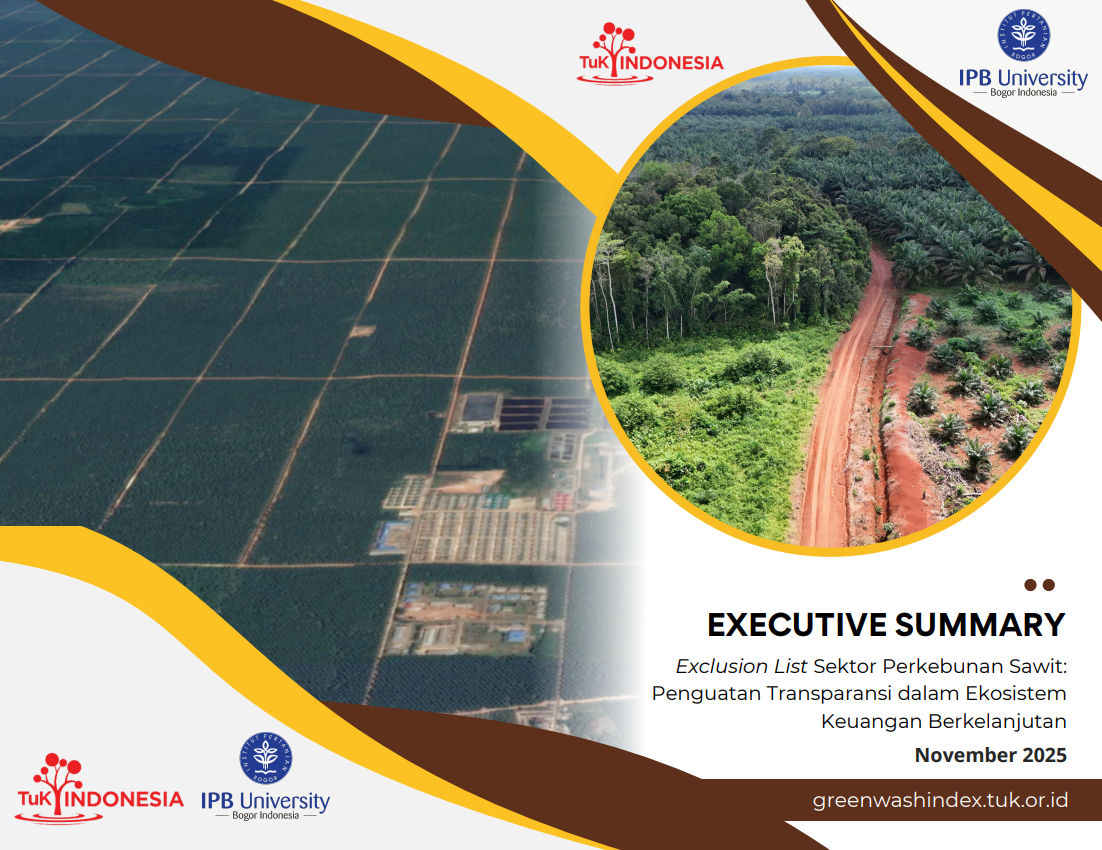
As global discussions on green financing and sustainable finance have evolved since the early 1990s, financial institutions are increasingly expected to integrate environmental and social risks into their investment decisions. However, in Indonesia, the implementation of these principles (both green and sustainable) still faces a gap between commitment and practice, particularly in high-risk sectors such as palm oil plantations. As a result, financing often flows to companies involved in deforestation, human rights violations, and agrarian conflicts.
There are at least three main factors driving these financing deviations. First, the orientation of both the state and financial institutions remains centered on economic growth (pro-growth), where short-term financial gains are prioritized over Environmental, Social, and Governance (ESG) performance. Second, there is an absence of binding regulations that compel banks and financial institutions to substantively adhere to ESG principles. Third, weak environmental law enforcement allows violations of sustainability principles to occur without meaningful legal consequences for both businesses and financiers.
In response to these challenges, Transformasi untuk Keadilan Indonesia (TuK INDONESIA), in collaboration with the Agrarian Studies Center of the International Research Institute for Social, Economic, and Regional Development (LRI IPB University), has developed an Exclusion List as a governance instrument to ensure that:
- Financial institutions exercise greater caution in extending financing;
- Companies maintain clean and clear (CnC) business practices.
This initiative aims to strengthen transparency, accountability, and integrity within the sustainable finance ecosystem, ensuring that sustainability principles do not remain merely normative commitments but genuinely shape the behavior of financial institutions and corporations. Through the Exclusion List, it is expected that more responsible financing governance can be established—one that upholds social justice and aligns with efforts to protect the environment and community rights in Indonesia.